General Eye Conditions and Tests · Eye Health Answers
Common eye symptoms and eye tests explained
Most people come to an eye clinic with a symptom rather than a diagnosis. These pages explain what common eye symptoms usually mean, which ones need attention quickly, and what the standard eye tests involve.
How eye symptoms are sorted out
Three questions usually narrow things down: is the eye painful, is vision reduced, and did it come on suddenly? A red eye that is comfortable with normal vision is usually a surface problem. A painful red eye with reduced vision is potentially serious. Sudden painless loss of vision points to the retina, the optic nerve or the blood supply.
Self diagnosis is unreliable because very different conditions can look similar from outside. An examination with a slit lamp, eye pressure measurement and a look at the back of the eye settles most questions in a single visit.
Symptoms that should never be left
- Sudden loss of vision, in one or both eyes
- Severe eye pain, with or without redness
- A curtain, shadow or shower of new floaters
- An injury to the eye, or any chemical splash
- A red painful eye in a contact lens wearer
- Sudden double vision, especially with headache or weakness
A comprehensive examination
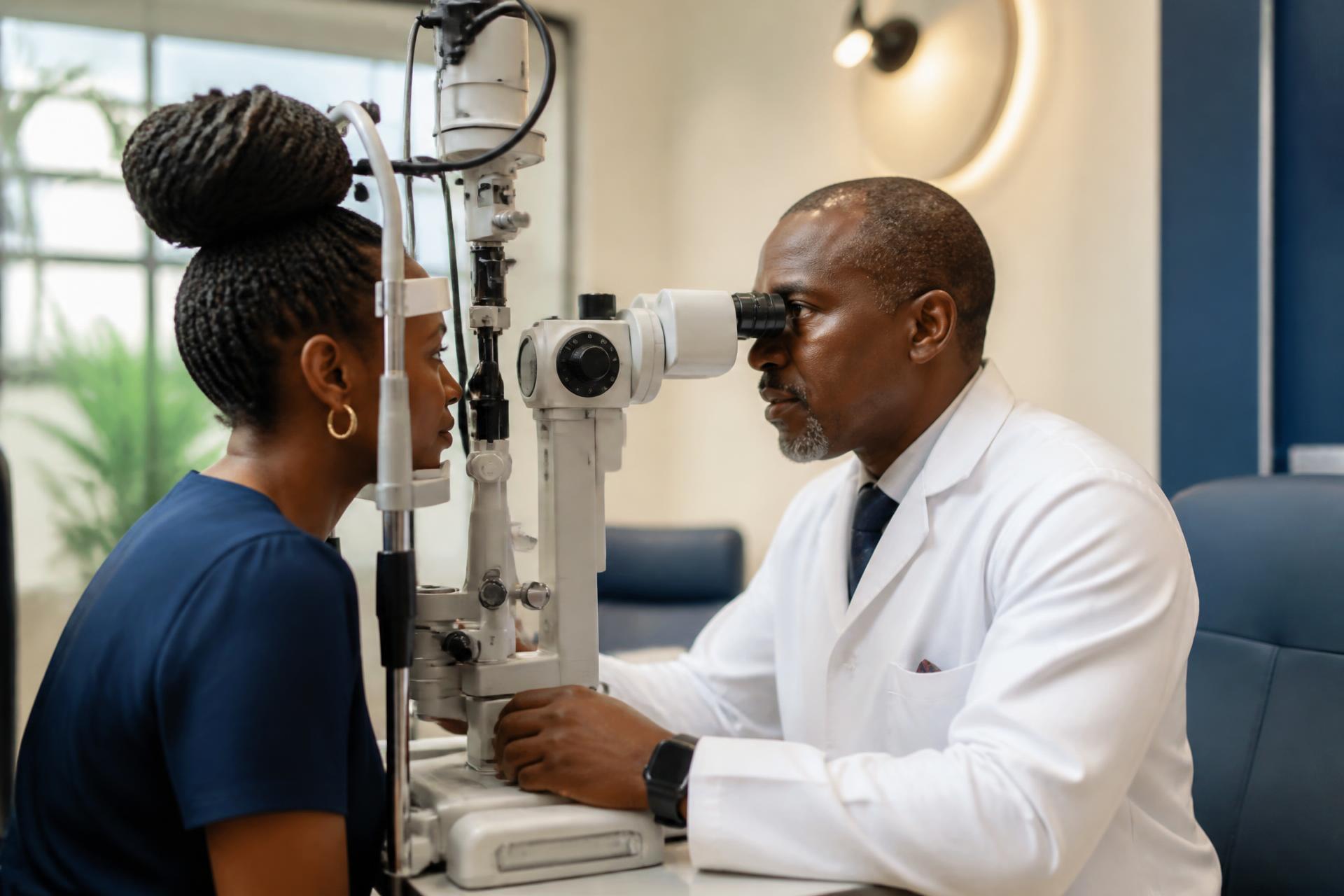
A full eye examination at Standard Eye Specialist Hospital covers vision and glasses testing, eye pressure measurement, examination of the front of the eye at the slit lamp, and dilated examination of the retina and optic nerve, with visual field testing and imaging such as optical coherence tomography where indicated.
Frequently asked questions
- Can I use leftover eye drops from a previous problem?
- No. Drops that contain steroid or antibiotic can make some conditions much worse, including infections of the cornea and herpes of the eye. Have the eye examined before using anything.
- Is it safe to use breast milk, urine, herbs or sugar solution in the eye?
- No. These traditional remedies do not treat eye disease and can introduce infection or cause chemical injury to the surface, sometimes with permanent damage. Please have the eye assessed instead.
- How often should an adult have an eye examination?
- Every two years for healthy adults, and yearly for anyone with diabetes, glaucoma, a strong family history of eye disease, or from about forty years of age if you are of African ancestry.
Would you like a general eye conditions and tests assessment?
Request a specialist assessment at our hospital in Garki, Abuja.
Answers in this topic
Common general eye conditions and tests questions
Choose the question closest to yours.
What causes a red eye?
Most red eyes are caused by surface problems such as conjunctivitis, dryness, allergy or a burst surface blood vessel, and they are uncomfortable rather than painful, with normal vision.
Read the answerWhat does eye pain mean?
The type of pain matters.
Read the answerWhy is my vision blurred?
Blurring that comes and goes and clears with blinking usually points to the tear film or an uncorrected prescription.
Read the answerWhat should I do if I suddenly lose vision?
Sudden loss of vision is a medical emergency.
Read the answerWhy are my eyes itchy?
Itching is the hallmark of allergy.
Read the answerWhat does discharge from the eye mean?
The type of discharge is a useful clue.
Read the answerWhy am I sensitive to light?
Light sensitivity, or photophobia, most often comes from the corneal surface, for example dryness, a scratch or an ulcer, or from inflammation inside the eye.
Read the answerIt feels like something is in my eye. What is it?
A gritty sensation does not always mean something is in the eye.
Read the answerWhat is a pterygium?
A pterygium is a wedge of thickened tissue that grows from the white of the eye onto the cornea, usually on the side nearest the nose.
Read the answerWhy do I need reading glasses after forty?
The lens inside the eye stiffens with age, so it can no longer change shape to focus on near objects.
Read the answerWhat is a refractive error?
A refractive error means the eye does not focus light exactly on the retina, so the image is blurred.
Read the answerWhat happens at a comprehensive eye examination?
A comprehensive eye examination checks how well you see, what glasses you need, the pressure inside your eyes and the health of the front and back of each eye.
Read the answerWhat does a diabetic eye examination involve?
A diabetic eye examination checks vision, eye pressure, the lens and, most importantly, the retina after dilating drops, supported by retinal imaging and an OCT scan of the macula where needed.
Read the answer